


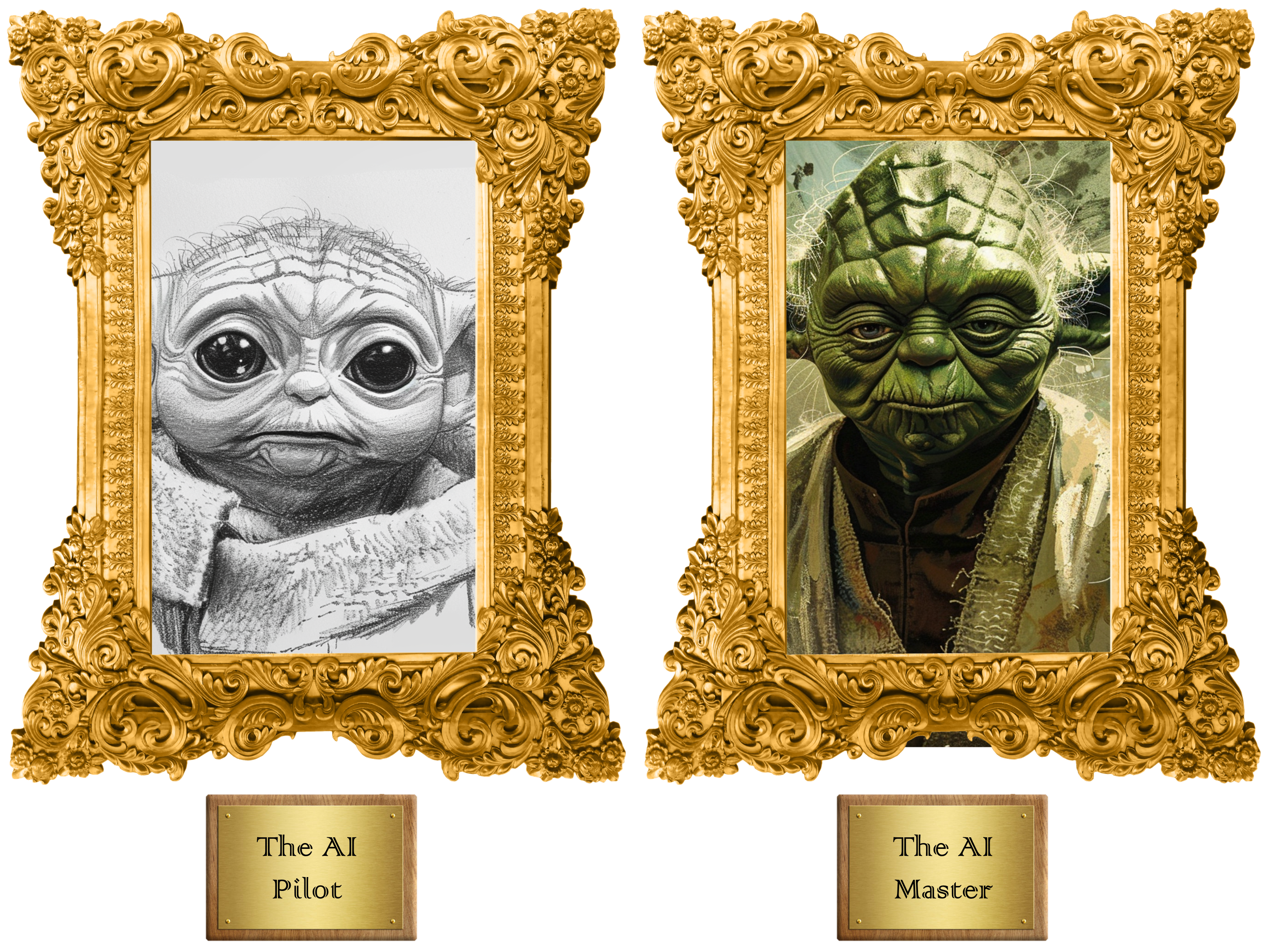
The AI Pilot & The AI Master as displayed at The Museum of AI – Made with Midjourney
Introduction
In today’s rapidly evolving marketplace, marked by increased competition and continuous technological advancements, brands are facing unprecedented challenges. The Boston Consulting Group’s recent report highlights the transformative power of Artificial Intelligence (AI) and Generative AI (GenAI) in propelling marketing strategies from basic to highly mature stages. This article delves into the journey of transitioning from piloting AI in marketing initiatives to fully integrating these technologies to drive superior marketing maturity and business growth.
The Shift from Basic Digital Capabilities to AI-Driven Maturity
“Before the pandemic, having basic digital marketing capabilities was sufficient for brands to execute mature marketing strategies. However, the post-pandemic landscape, characterized by rising prices, market volatility, and geopolitical tensions, demands a more sophisticated approach. Advanced technologies like AI, GenAI, and cloud computing are no longer optional but essential for brands aiming to not just survive but thrive in this new era.” (BCG x Google, 2024)

The AI Pilot is wide-eyed, fresh-faced, and ready to learn – Made with Midjourney
Piloting AI: The First Step Toward Full Integration
Initiating AI pilots is crucial for companies to understand and test the waters with basic AI capabilities before fully committing to them. Here's how brands can start:
Define Objectives: Clearly define what the pilot aims to achieve, such as improving customer engagement or optimizing ad spend.
Choose the Right Tools: Select AI tools that align with the set objectives and consider partnerships with technology providers for expertise and support.
Start Small: Launch pilots on a small scale to manage risks and gather detailed insights.
Evaluate and Learn: Monitor the pilot's performance against predefined KPIs and learn from the outcomes to inform broader AI strategies.
These pilot projects are vital learning opportunities, allowing brands to experiment with AI functionalities in a controlled environment and gather valuable data on their effectiveness and areas for improvement.

The AI Master has seen it all and is ready to spread the force – Made with Midjourney
Mastering AI: The Role of AI and GenAI in Marketing Evolution
AI and GenAI are at the forefront of this transformation. They provide businesses the tools to automate and optimize various marketing processes, including media buying, targeting, personalization, and creative production. This automation leads to more tailored and engaging customer experiences, higher efficiency, and effectiveness in marketing campaigns. For example, AI-driven solutions enable brands to understand and predict consumer behavior more accurately, allowing for more effective campaign adjustments in real-time.
Developing New Capabilities
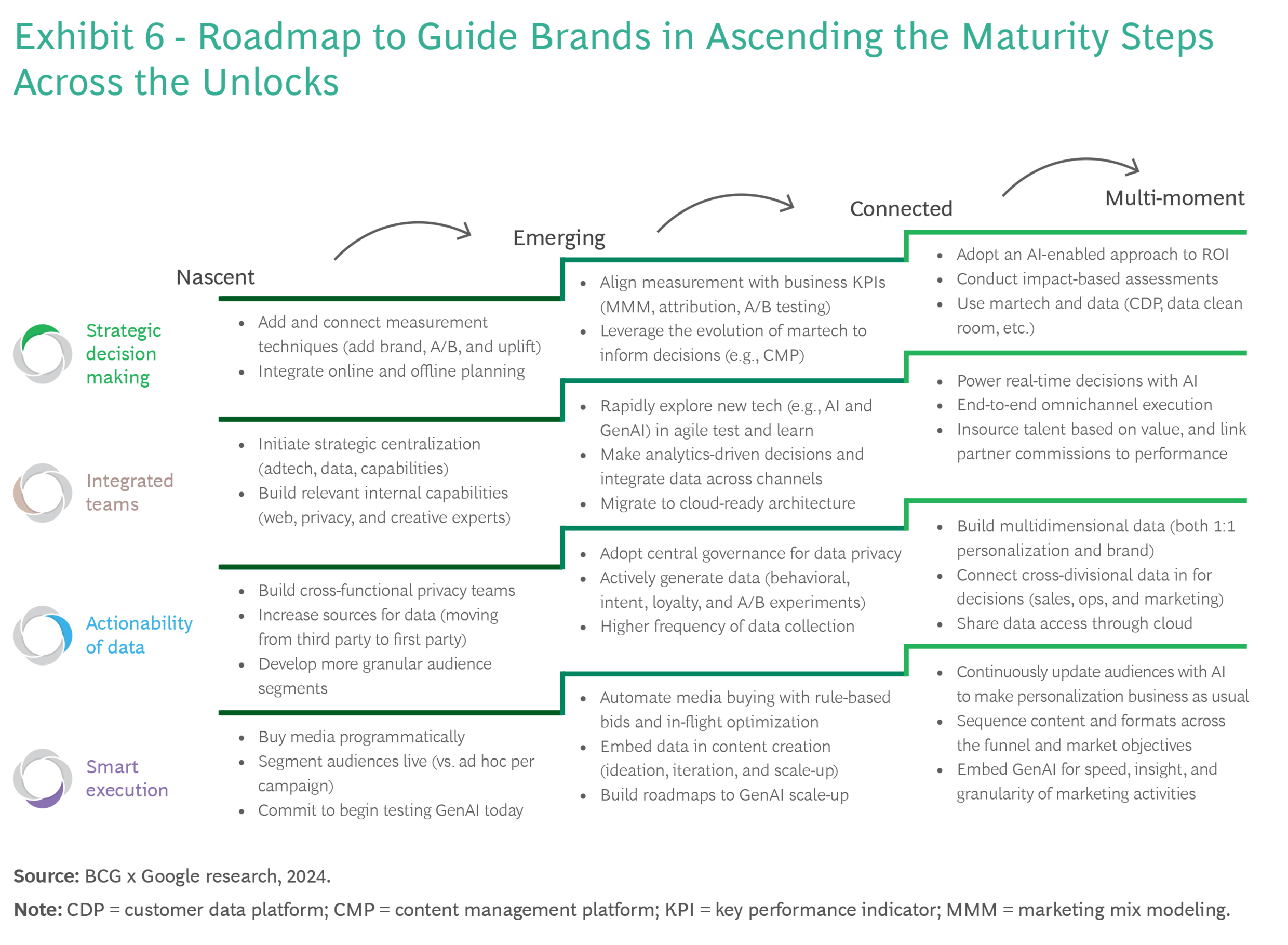
As per the Boston Consulting Group's analysis, marketing maturity fell by 8% from 2021 to 2024, underscoring the need for brands to continually adapt and enhance their capabilities. Today, a sophisticated marketing operation must be driven by AI and GenAI. Brands are categorized into four levels of marketing maturity: nascent, emerging, connected, and multi-moment, each requiring different strategies and capabilities for advancement.
Strategic Roadmap for AI Integration
To effectively harness AI in marketing, brands must follow a strategic roadmap (unlocks) that includes:
Strategic Decision-Making: Integrating AI to link marketing performance with strategic outcomes, enabling better decision-making across both online and offline channels.
Fostering Integrated Teams: Building teams with AI and GenAI expertise, either by insourcing key capabilities or partnering with specialists who can provide strategic insights and technological proficiency.
Actionability of Data: Shifting from mere data collection to actionable insights. This involves enhancing data quality, focusing on enriched data that drives personalization, and preparing for a cookieless future.
Smart Execution: Prioritizing use cases that have a proven business impact, using AI's predictive capabilities and automation to refine marketing strategies continuously.
Conclusion
The transition from piloting AI technologies to using them as a cornerstone of marketing strategy is crucial for brands aiming to enhance their competitiveness and profitability. By focusing on the development and integration of AI capabilities, companies can not only keep pace with technological advancements but also set new standards for marketing excellence. As brands climb the maturity ladder, they transform from digital novices to innovators, continuously improving their strategies and outcomes in a cycle of perpetual enhancement.