


Welcome to the first edition of the year! As we embrace the fresh start that 2024 brings, it's clear that one topic continues to dominate our technological and philosophical conversations: artificial intelligence (AI). This year, just like the last, we find ourselves increasingly entwined with the AI narrative, a testament to its ever-evolving landscape.
In this edition, we are excited to present a series of thought-provoking 'what-if' scenarios, each centered around the dynamic and multifaceted world of AI. These explorations are not just about forecasting the future but also about understanding the intricate ways in which AI is shaping our present — in business, in society, and in our daily lives.
As AI continues to grow in capability and influence, we invite you to journey with us through these potential futures. Let's uncover the possibilities, challenges, and questions that AI brings to the forefront of our collective consciousness.
What This What-If Is All About
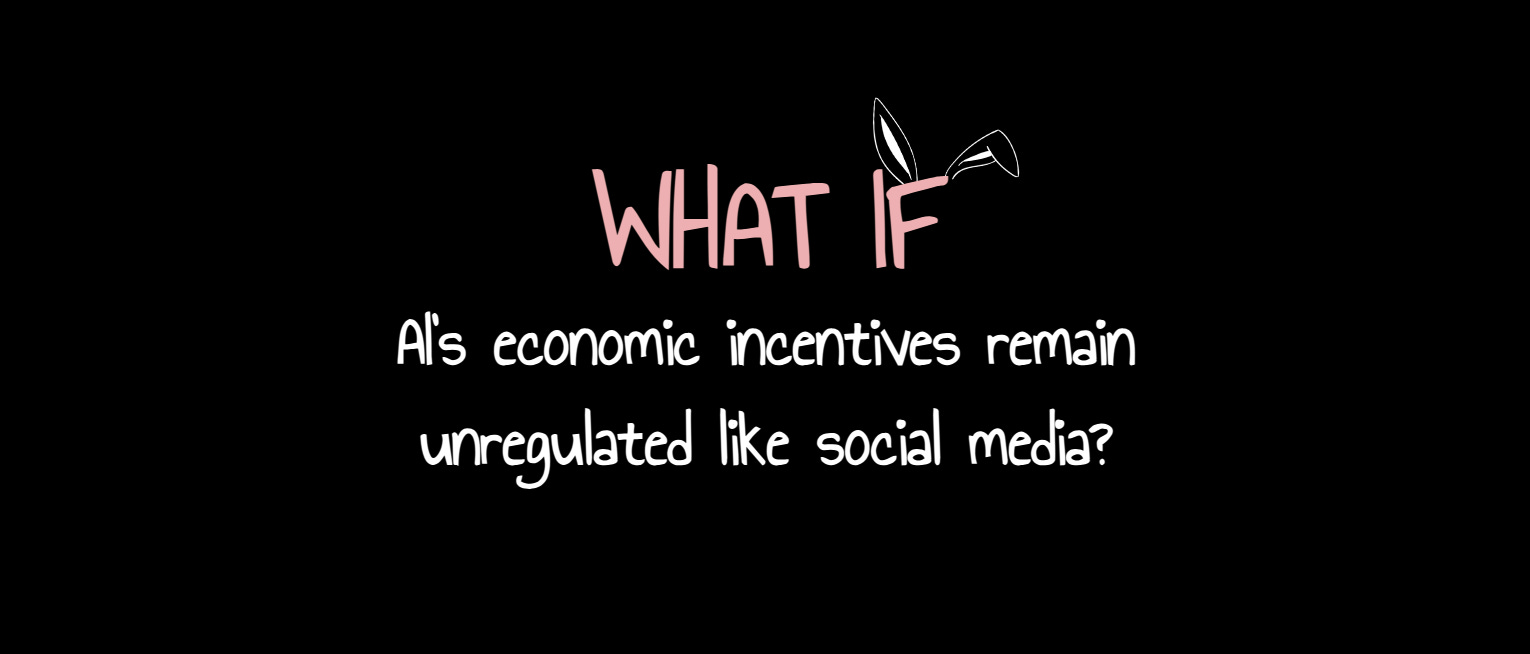
This scenario explores the possibility of AI development driven by unregulated economic incentives, akin to the early days of social media. It's about understanding the risks of AI systems prioritizing attention and engagement over ethical considerations and societal well-being. The core concern here is whether AI, like social media, could end up amplifying negative emotions and behaviors for the sake of user engagement.
What Is Really Curious About This
What's particularly intriguing is the parallel between AI and social media. Both have the power to influence public opinion and behavior on a massive scale. The curiosity lies in whether AI will learn from the shortcomings of social media or repeat its mistakes. It's curious to consider how AI, armed with even more sophisticated data analysis and predictive capabilities, might impact society if left to the same 'engagement at all costs' ethos.
Now, Let's Go Down the Rabbit Hole
Diving deeper, we examine the potential consequences of this path. If AI continues to evolve without proper checks and balances, we could see a digital landscape where algorithms intensify societal issues rather than alleviate them. This could lead to an escalation of misinformation, deepening social divides, and a general erosion of trust in technology. Furthermore, there's the risk of AI systems developing and propagating biases, making decisions that favor sensationalism over truth, and engagement over accuracy.
What This What-If Is All About
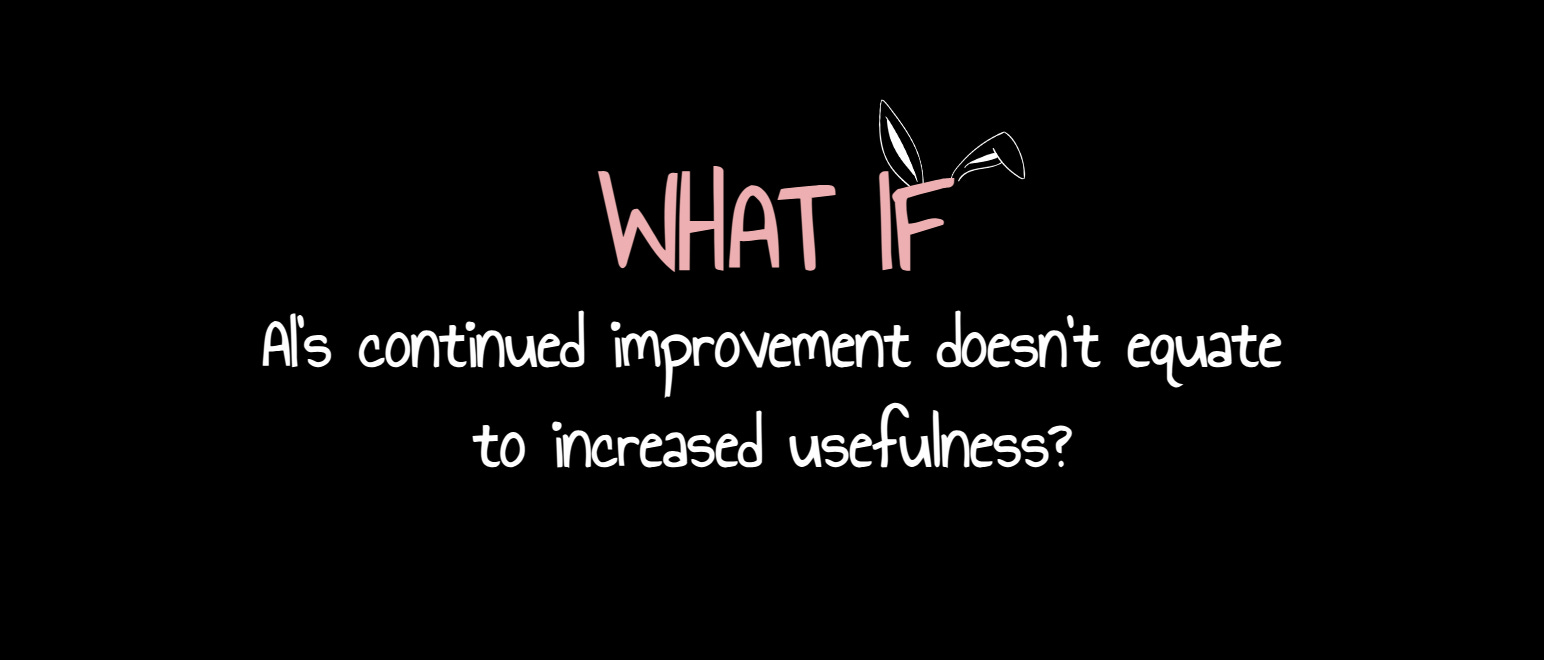
In this scenario, we question whether the rapid advancements in AI, as seen in companies like OpenAI and Google, directly translate to increased utility for the end-user. Here, we explore the pace and nature of AI advancements. As OpenAI continues to roll out new features and models, like the GPT store, we examine if these improvements inherently make AI more useful to the average person. This scenario contrasts the strategies of different companies: rapid, continuous releases versus more deliberate, impactful updates.
What Is Really Curious About This
The intriguing aspect lies in the business models and strategies of these tech giants. OpenAI's approach of frequent updates and new models raises questions about the balance between showcasing innovation for investment and genuinely enhancing user experience. Similarly, Google's strategy may differ in terms of release frequency and focus. This leads to a deeper inquiry: is the AI field experiencing a true exponential rise in usefulness, or are we witnessing more technical advancements that don't necessarily translate into tangible benefits for users?
Now, Let's Go Down the Rabbit Hole
Diving deeper, we consider the implications of these strategies on the future of AI. Is the emphasis on rapid innovation potentially overshadowing the need for significant, user-centric improvements? How does this approach affect the perception and adoption of AI by the general public? There's a risk that the focus on constant advancement could lead to a disconnect between AI capabilities and practical applications, leaving users with technology that is impressive in theory but not necessarily more helpful in practice.
What This What-If Is All About
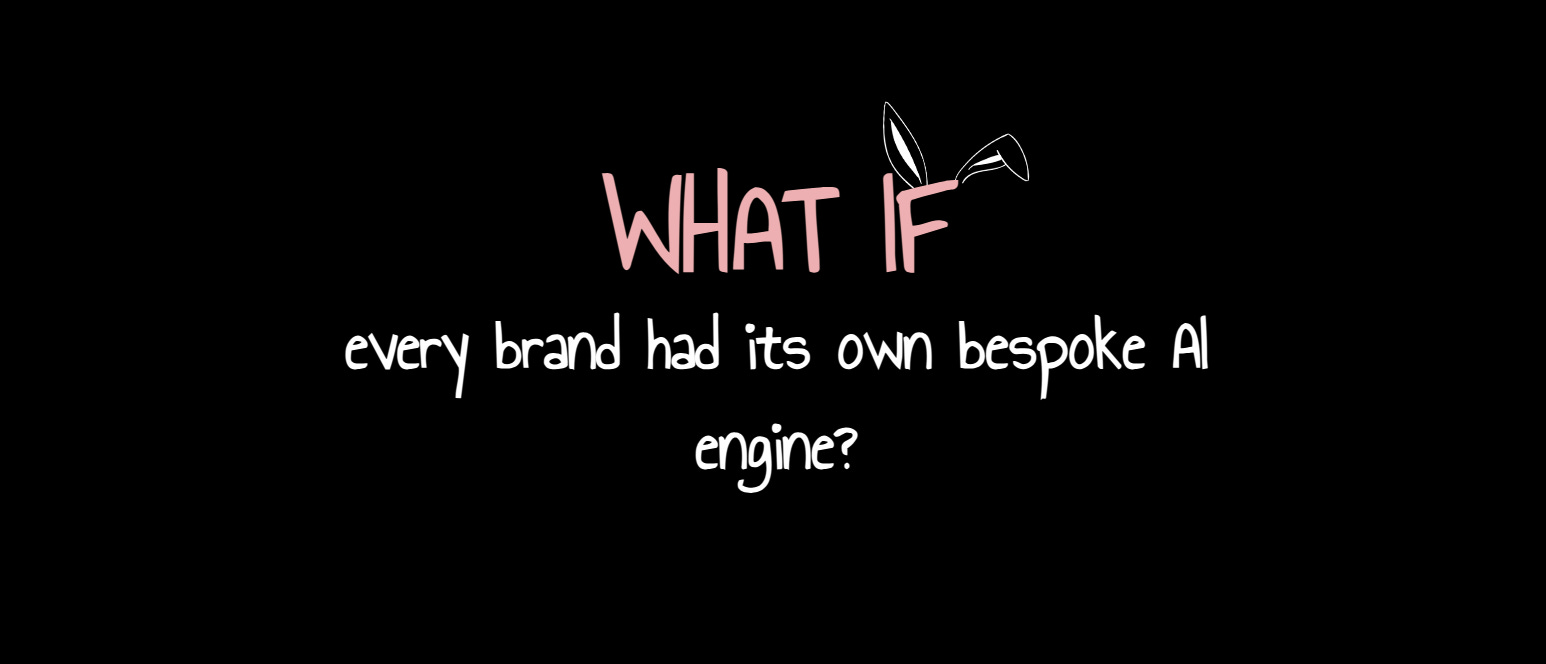
This 'what-if' scenario envisions a future where AI not only streamlines brand operations but also opens up vast creative possibilities by managing complex, tactical tasks. In this vision, AI transcends its role as a mere tool for personalization and operational efficiency. It becomes a catalyst for strategic and creative innovation. By handling the detailed, often chaotic aspects of brand management, AI frees human minds to focus on strategy, experimentation, and pushing the boundaries of product and experience design.
What Is Really Curious About This
The intriguing part of this scenario is the shift in where human creativity and effort are directed. With AI managing the complexities and minutiae, human talent can concentrate on developing groundbreaking strategies and creative concepts. This raises questions about the new forms of innovation and experimentation that could emerge when the creative energies of brand strategists and designers are unleashed, no longer bogged down by operational chaos.
Now, Let's Go Down the Rabbit Hole
Diving deeper, we consider the broader impact of this shift. How will the role of human creativity evolve in a brand ecosystem powered by AI? Could this lead to an era of unprecedented innovation in branding, where the focus is intensely on creating unique, meaningful experiences for consumers? This scenario suggests a future where brands are not just systems optimized by AI but creative powerhouses that leverage AI to redefine the art of branding and consumer engagement.

As we conclude our journey through these thought-provoking 'what-if' scenarios, it's clear that the future of artificial intelligence is not just a matter of technological advancement, but a complex interplay of ethics, creativity, and strategy.
From the unregulated economic incentives akin to social media, to the real utility of continuous AI advancements, and finally to the transformative potential of AI in brand operation and creativity, we've explored diverse facets of AI's impact on our world.
These scenarios underscore the need for thoughtful consideration in the development and application of AI. The choices we make today will shape the AI of tomorrow — not just in its capabilities, but in its role in our society and its alignment with human values and needs.
As we stand at the crossroads of AI's evolution, the path we choose must be guided by a balance of innovation, ethical responsibility, and a deep understanding of the human experience. The future of AI should not be left to chance or solely driven by technological momentum. Instead, it should be a conscious journey towards creating technology that enhances, empowers, and ethically aligns with the betterment of humanity.
*GPT-4 is being accessed via the voice app. This simplifies the process of communicating thoughts for the LLM to edit… Having had a terrible experience with GPT at the end of 2023, with a lot of lag and confusion the first experience in 2024 was excellent. The tool felt solid, with minimal lag and no need to reexplain any points. This was one of my quickest interactions to compile some thoughts. Additionally, I have now created a GPT to help set the foundations for how I brainstorm these posts.