


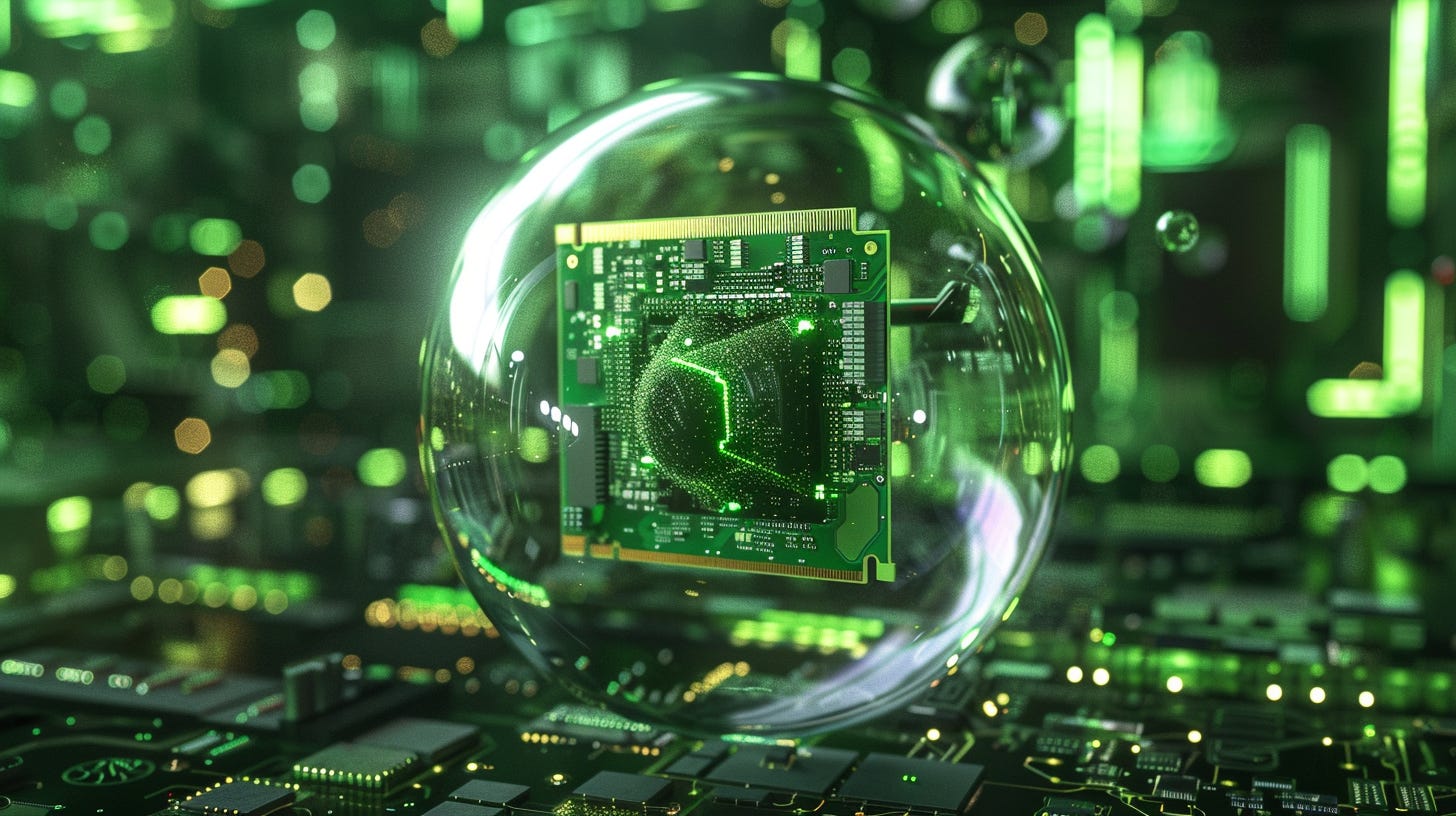
Preventing a bubble from forming around GPUs – Made with Midjourney
Introduction
In an impressive display of financial strength, NVIDIA has shattered market expectations with its latest quarterly earnings, revealing a record-breaking revenue of twenty-six billion dollars—an eighteen percent increase from the last quarter and a massive two-hundred sixty-two percent surge from the year-ago period. As NVIDIA’s stock prices soar past one thousand dollars for the first time, the company not only celebrates this financial milestone but also faces the scrutiny that comes with such rapid growth. This scenario draws inevitable comparisons to the early 2000s when companies like Cisco experienced similar rapid ascensions, only to face the bursting of the dot-com bubble. Are we on the brink of a genuine AI-driven revolution or the inflation of a new tech bubble?
Cisco’s Bubble and Share Price Collapse
In the late 1990s, Cisco Systems became synonymous with the internet boom, supplying much of the hardware that powered the internet's infrastructure. As speculative investments soared, so did Cisco’s share price, peaking dramatically before crashing down as the bubble burst. This collapse was a sharp reminder of the dangers of overvaluation based on speculative growth rather than sustainable advancements.
NVIDIA’s Current Trajectory and the Creative Gap
Unlike Cisco, NVIDIA operates in a fundamentally different technology landscape, one dominated by AI and machine learning, which has broader applications across both B2B and B2C sectors. Despite their success, there is a notable 'creative gap' in translating these B2B advancements into B2C applications that can significantly impact everyday life. This gap poses a risk but also a tremendous opportunity for real growth.
Next Steps: Bridging the Gap
To avoid a repeat of history, companies like NVIDIA must focus on not just advancing technology but also creatively applying it. Developing pilot projects that demonstrate the practical benefits of AI, fostering cross-industry collaboration, and focusing on user-centric designs are essential steps towards making AI technologies truly beneficial for consumers.
Conclusion
As we ponder the future of AI and its integration into everyday life, companies like WPP, with their focus on creativity and digital marketing, are poised to play a crucial role. These companies can bridge the creative gap by applying AI in innovative ways that resonate with consumers, transforming AI’s potential into real-world solutions. In doing so, they can help ensure that the promise of AI does not inflate another bubble but instead fosters a new era of sustainable growth and meaningful consumer interaction.