This wasn’t supposed to be a two-parter.
I posted The Upside-Down Dunning-Kruger a few days ago, thought I’d said my piece, and was ready to move on. But the rabbit hole had other ideas... it usually does.
Within 48 hours of publishing, my feed served me up the exact opposite failure mode - loud, confident, strategically incoherent - and I realised I had to do a Part 2 to get it out of my system.
Part 2 is about the other side of the curve. The ones who aren’t in the valley at all. The ones who’ve turned the whole thing inside out.
“Two people with Claude can replicate a Fortune 500 business line in 60-90 days”
That’s a real quote, from a real LinkedIn post by Peter Diamandis last week - the punchline of a full Moonshots episode with Salim Ismail unveiling what they’re calling “the Organizational Singularity” and ExO 3.0.

I watched it… I genuinely struggle to get through this sort of stuff. Not because it’s badly made - it isn’t - but because listening to this narrative in the cold light of day, knowing the actual challenges enterprises are wrestling with (the ones I laid out in Part 1), it lands as something close to surreal. There are flashes of real signal in there - the fiduciary wedge framing, the recursive self-improvement at the workflow level, the digital-twin-at-the-edge approach is closer to the right operating order than the LinkedIn soundbite suggests. But the overall register - the breathless inevitability, the casual disposal of three-quarters of the workforce, the “you’re either on the evolutionary tree or you’re going extinct” framing - it’s the full tech-bro gear, and it’s hard not to hear the echo of 1999 in every sentence.
Galloway hears it too. He spends a chunk of the Prof G Markets episode explicitly drawing the parallel: tech-narcissism, momentum euphoria, the belief that Silicon Valley is becoming “the operating system for the world.” Different financing structure to the dot-com era (cash juggernauts, not debt-financed), but the same cultural fingerprint. The same swagger. The same conviction that this time, the rules of operating reality don’t apply.
The soundbite layer that’s now circulating from the Diamand is episode - the bit that’s actually shaping how thousands of executives are being asked to think this week - is the bit that’s broken. Listen to the greatest hits stripped of context:
“Two guys with Open Claude can disrupt any high-margin line of your business in 60–90 days.”
“Middle management’s coordination role drops ~90%. A company of 800 can run with 80.”
“The org chart as we know it is dead.”
“The biggest moat is an intelligence moat.”
“You’re either on the evolutionary tree or you’re going extinct. It’s that simple.”
“Sheikh Mohammed wants 50% of the Emirati government running on this model.”
This is less about Peter specifically and more about what he represents - the loudest, most articulate version of a much wider chorus that’s doing real damage to how serious leaders are being asked to think about AI in serious businesses. Strip the names off the post and the same drumbeat is showing up in dozens of places. That’s what makes it worth pushing back on.
Because if you actually run a Fortune 500 business line - not a LinkedIn post about one, not a podcast segment about one - you know that two people with Claude cannot replicate it in 90 days. They might replicate the surface of it. The output shapes. The artefacts. The deliverables that look right from the outside. What they categorically cannot replicate in 90 days is the substance: the 40-year client relationships, the regulatory scar tissue, the trust capital, the institutional memory, the messy human judgement, the compliance regime, the brand equity, the data plumbing, the failure modes that everyone in the building knows to avoid because they lived through them in 2009 and 2017 and 2023.
You can replicate the chip. You cannot replicate the salsa. (More on Galloway in a minute.)
And the moment you tell a CEO they can - or should be able to - you’ve handed them a permission slip to skip the only part of the work that actually matters.
Welcome to the Inside Out
If Part 1 was the Upside Down - the mirror world that looks almost like ours but where everything is darker and slower - Part 2 is one level deeper. This is Vecna’s world. The Inside Out.
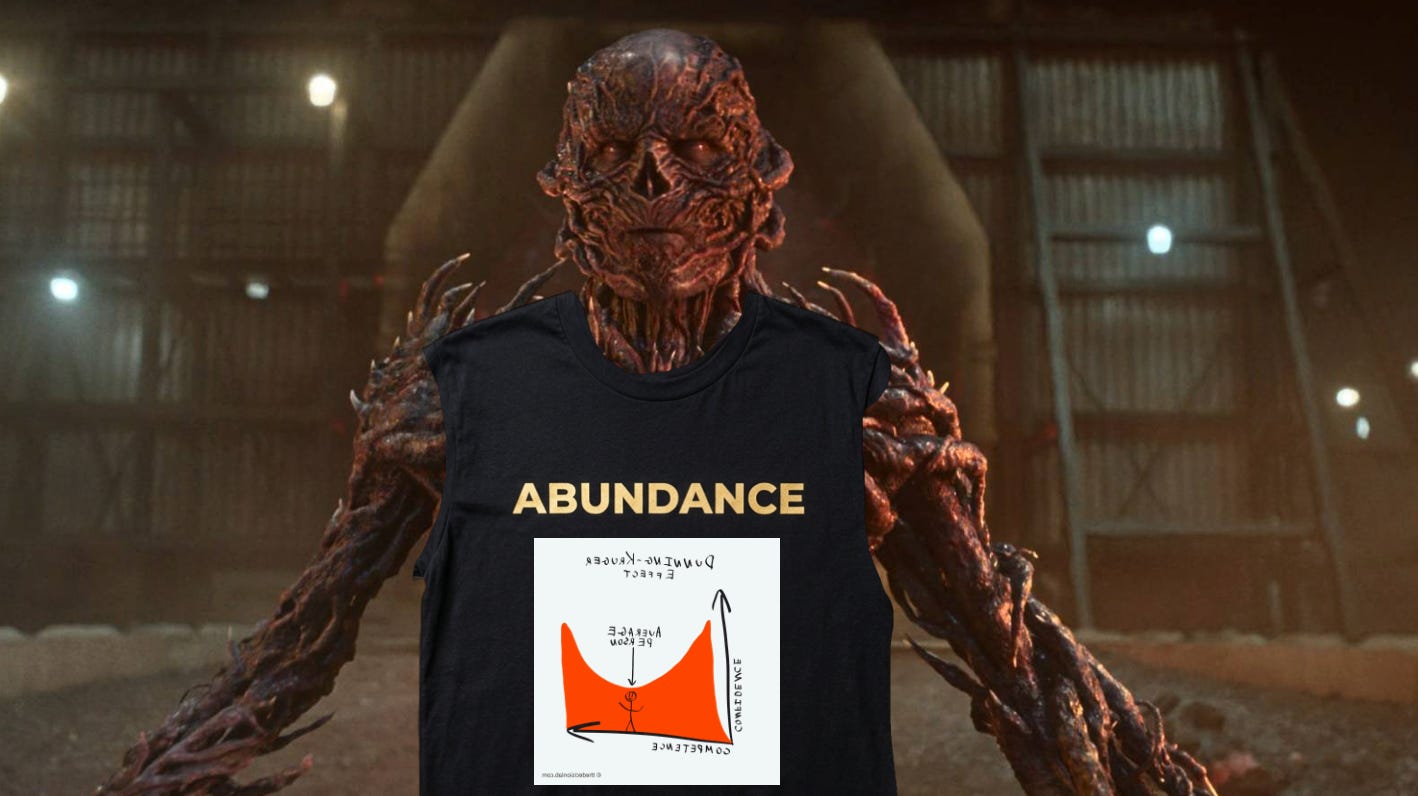
Vecna, for the non-Stranger Things people, is the physical manifestation of humanity’s deepest trauma, repressed shame, and the toxic inner critic that turns people against themselves. He looks like a human turned inside out - the soft tissue exposed, the structure reversed, the logic running the wrong way. He’s what happens when the thing that was supposed to be inside ends up on the outside, and vice versa.
That’s the metaphor I keep coming back to with this strain of AI commentary… also I used a Stranger Things metaphor in Part 1, and I needed to be consistent.
The correct operating order for any serious transformation - and any decent operator will tell you this - is:
Problem → People → Process → Tools → Scale
You start with the problem. You understand the people whose work it touches. You design the process around them. Then you introduce the tools. And only once that’s stable do you scale.
The Inside-Out flips this completely:
Tools → Scale → Process → People → Problem
Tech first. Scale-talk immediately. Process treated as friction to be removed. People treated as a cost line to be cut. The actual problem the business exists to solve barely gets a mention, because the technology itself has become the answer in search of a question.
Everything that should be on the inside - the humans, the judgement, the lived domain expertise, the messy reality of regulated industries - has been pushed to the outside, vestigial, decorative, soon to be deprecated. And everything that should be a tool in service of humans is now wearing the skin of strategy.
That’s the Inside-Out. And like Vecna, it’s not actually a vision of the future. It’s the projection of an industry’s deepest insecurity onto the rest of us.
The swagger is a confession
Here’s what I think is actually going on when someone posts “two people with Claude can replicate a Fortune 500 business line in 90 days.”
It sounds like a vision. It’s actually a confession of how little the speaker understands about what a Fortune 500 business actually is.
A Fortune 500 business is not a feature set. It’s not a workflow diagram. It’s not a thing you can clone from a GitHub repo. It is decades of accumulated:
Client relationships that took 20 years to build and one bad meeting to lose
Regulatory scar tissue earned the hard way, through audits, fines, and learning what not to do
Institutional memory about why certain decisions were made and which doors got closed for good reasons
Trust capital with regulators, partners, employees, and the market
Domain judgement that knows the difference between what the data says and what the data means
Brand equity built across millions of interactions, most of them human
Two people with Claude can replicate the surface of a business in 90 days. They cannot replicate the substance. And mistaking one for the other is the entire intellectual error of the Inside-Out.
It’s also, if you stop and think about it for thirty seconds, strategically incoherent on its own terms.
The game theory hole the swaggerers walk straight into
This is the part that genuinely surprises me, because it’s not subtle.
If two people with Claude can replicate a Fortune 500 business in 90 days, then two other people with Claude can replicate the replicators in 90 days. And two more after them. And two more.
The “intelligence moat” the tech-maximalists keep talking about collapses to zero by its own logic. It’s the most non-defensible competitive position ever proposed with a straight face. If the technology is the moat, and the technology is available to everyone, there is no moat. That’s not a hot take. That’s a definition.
So what are the durable moats in a world of cheap, ambient intelligence?
The exact things the Inside-Out is dismissing.
Relationships. Trust. Domain judgement. Regulatory standing. Brand. Distinctiveness of point of view. The accumulated, hard-to-replicate, deeply human stuff that 20 years of operators built - and that an 80-person company running on 80 agents structurally cannot generate from a standing start.
Scott Galloway has the cleanest line on this: AI pushes outputs to the median. “All chip, no salsa.” The chip is now a commodity. If everyone has the chip, the salsa is the entire business. And the salsa is human.
The companies that win the next decade won’t be the ones who automated 90% of their middle management. They’ll be the ones who understood which 90% of their middle management was actually doing the coordination, judgement, and relationship work that makes the company worth anything in the first place - and which 10% was genuinely automatable busywork that should have been removed years ago, AI or no AI.
Those are very different exercises. The Inside-Out crowd refuses to distinguish between them. That refusal is the tell.
Galloway’s pin in the bubble
The financial layer is just as ugly, and Galloway has been laying it out clearly - most recently on Prof G Markets, live from San Francisco, where he and Ed Elson kicked off the tour by walking through the IPO race, why valuations will have to come down, whether humans might actually be cheaper than AI, and - my favourite bit - Scott taking the chance to roast the VC community to their faces. Worth an hour of your time.

He’s predicting a “vicious recorrection” - AI valuations down 50–70% within 24 months. Not a full 2000-style crash (today’s AI giants are cash-flow-financed, not debt-financed, which is a real and important difference) - but a brutal repricing. The trigger he’s watching for: a single Fortune 500 CEO publicly announces dramatic AI spending cutbacks citing weak ROI, or an Nvidia earnings miss. Either one takes 5-10% off the whole market.
His sharpest line: “Fear is the product and capital is the outcome.”
That’s the Inside-Out economy in one sentence.
The job apocalypse narrative - companies of 800 running with 80, the org chart is dead, middle management coordination drops 90% - isn’t a prediction. It’s a fundraising mechanism. The more frightened you are, the more you spend. The more you spend, the more the valuations get justified. The more the valuations get justified, the more the swaggerers get stages and book deals and LinkedIn impressions. Tech-narcissism dressed up as inevitability.
Galloway’s other great line: the upcoming OpenAI / Anthropic / SpaceX IPOs are “the last stop on the chump train” - the smartest insiders cashing out to the public market right before the recorrection. I don’t know if he’s right on the timing. But the structural argument - that the loudest voices in AI right now have the most to lose if the music stops, and are therefore incentivised to keep the music as loud as possible - is hard to wave away.
The point isn’t that AI is fake. It’s the opposite. AI is real, and the real applications (Galloway calls out pharma, autonomous vehicles, robotics - areas where I’d add Amazon’s million industrial robots as exactly the right kind of grounded example) are extraordinary. The hype isn’t dangerous because AI is overrated. It’s dangerous because the hype is misfocusing capital, attention, and strategic effort onto the parts of the story that won’t compound, at the expense of the parts that will.
If you build your enterprise AI strategy on top of the swagger, you are building it on top of a financing narrative, not an operating model. Those are not the same thing. And the bill is going to come due for anyone who confused them.
What it actually looks like when serious people do this work
This is where I get to talk about the day job, because the contrast is the whole point.
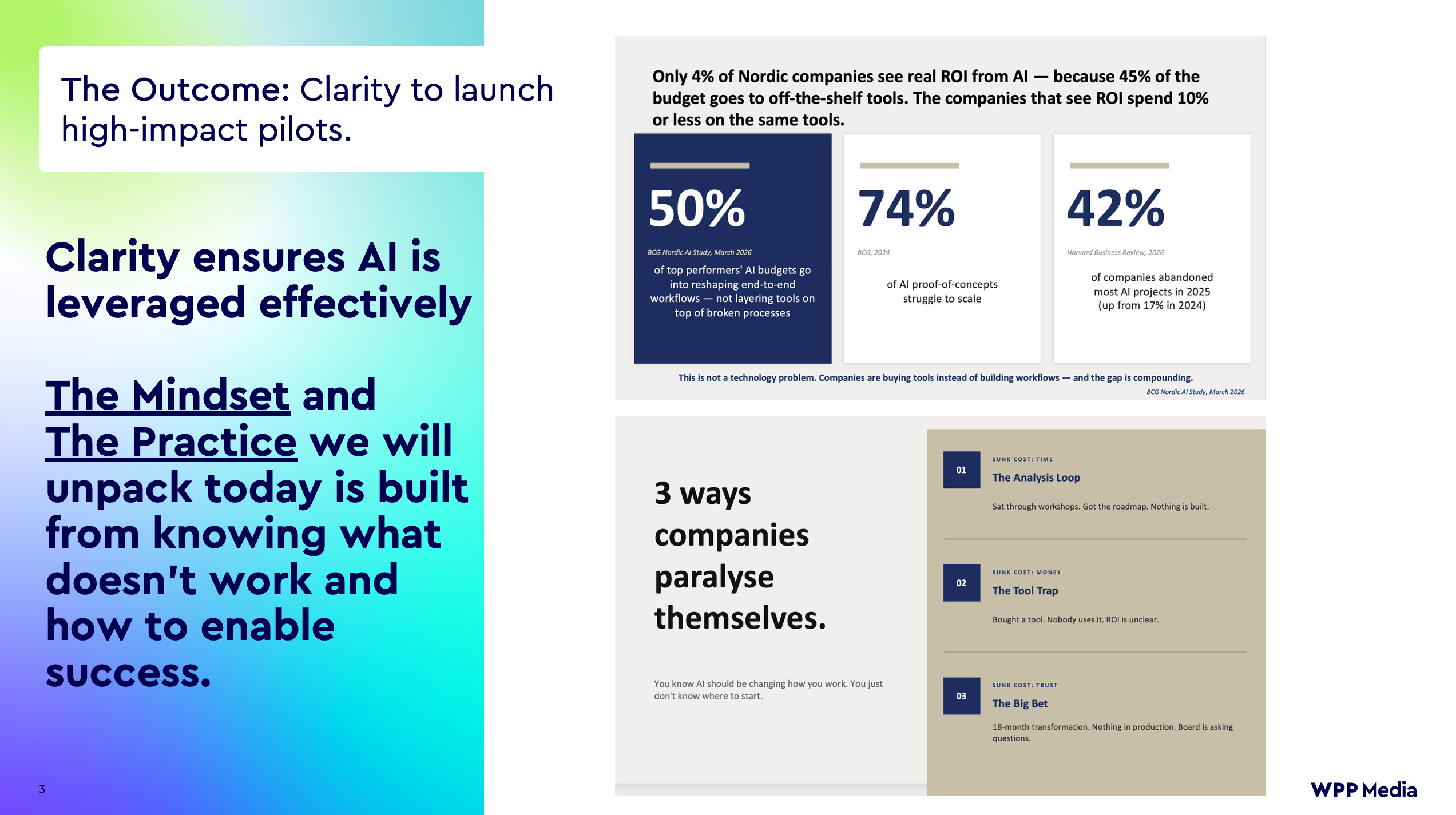
At WPP, the way we deploy WPP Open inside our clients looks nothing - nothing - like the LinkedIn vision:
Phased transformation: People, Process, Tools, Scale. In that order. We do not lead with tech. We don’t lead with tech because leading with tech is how you blow up campaigns, breach compliance, and torch trust that took decades to build.
Human at the Helm governs the model. Our people lead every task throughout the transformation process, decide what AI does, and own the final recommendation to the client. AI makes them better - it does not replace them. We will not deploy agents in place of humans where there is any risk to quality, compliance, or campaign integrity. Full stop. That’s not a hedge. That’s the operating principle.
Agents go live on Day 1. Embedded in proven workflows with WPP experts directing every output. Not 80 agents replacing 800 people in 80 days. A handful of proven agents augmenting the experts who are already there.
Agents are compartmentalised by design. One agent, one job, one part of the workflow, with human checkpoints between every handoff, especially in the first 100 days. We do not connect agents end-to-end early on, because end-to-end is exactly where governance breaks down and compliance becomes unauditable. The “fully autonomous multi-agent system” the LinkedIn crowd loves to brag about is, in a real world context, often is a malpractice claim waiting to happen.
This is what real, scalable, defensible enterprise AI looks like. The pilots are often pretty easy. Most people can run a pilot. The question is whether the pilot sits inside a long-term strategy with enough rigour to survive contact with reality. Part 1 was about leaders too cautious to start. Part 2 is about an entire commentariat that has started without ever stopping to ask whether they’re solving the right problem in the right order.
Both fail. They just fail at different speeds, and the Inside-Out one fails louder… and the cracks are showing.
The two failure modes are siblings
Here’s the thing I’ve sat with this week.
The Upside Down (Part 1) and the Inside Out (Part 2) look like opposites. Paralysis vs swagger. Under-confident vs over-confident. Too humble vs not humble enough.
They feel like opposite ends of a spectrum.
They’re not. They’re siblings. Both produce the same outcome: the human point of view drained out of the work, the distinctiveness flattened, the differentiation eroded, output that any competitor could replicate next quarter. One gets there by doing nothing. The other gets there by doing the wrong thing very loudly. The destination is the same.
And both are downstream of the same root cause: a leader who hasn’t yet built the mindset to engage AI from a place of grounded confidence in their own judgement. Part 1’s leader doesn’t trust their judgement enough to move. Part 2’s leader has stopped trusting human judgement at all and outsourced strategy to the model. Same wound, opposite scar.
Frame the mindset, and the way through both shows up. That’s what Mindset and Practice workshops are for - and it’s why I keep saying mindset has to come first. Not because the practice doesn’t matter (it absolutely does - the platforms, the agents, the workflows, WPP Open, the whole stack), but because no practice survives a broken mindset. You’ll either freeze, or you’ll sprint in the wrong direction.
The right mindset is the boring middle that nobody posts about: humble enough to learn, confident enough to act, strategic enough to sequence Problem → People → Process → Tools → Scale, and clear enough about your own distinctive view of the world to refuse to let the technology dilute it.
That’s not a hot take. It doesn’t trend. It just works. It was as true Pre-AI as it is Post-AI.
One last thing - the t-shirt
You’ve already seen the image of Vecna above. His T-shirt represents the inside-out clan, I made it sleeveless, it gave it a bit more swagger I thought...
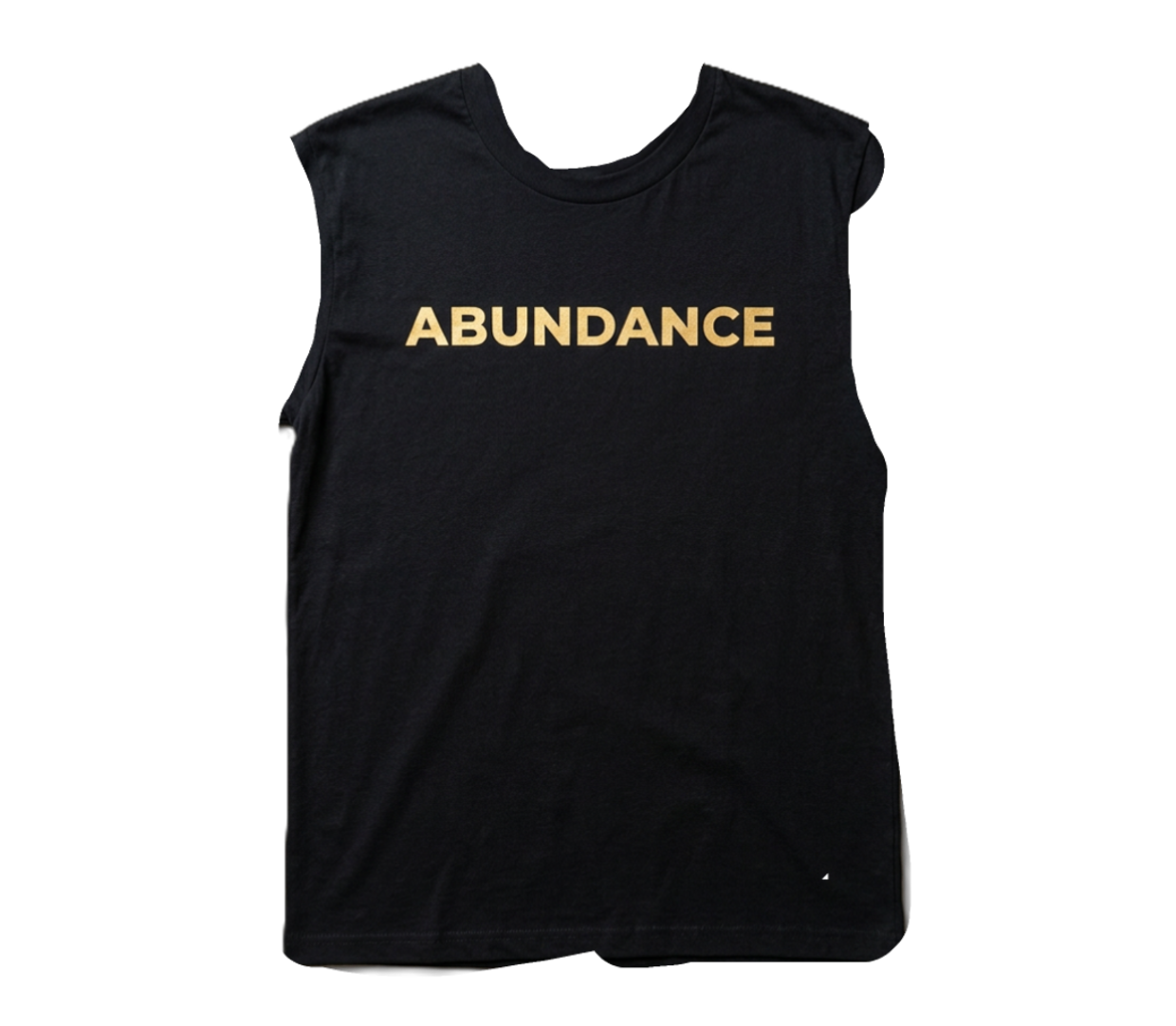
Through the entire 60-minute Moonshots episode where Peter and Salim outline how 75% of jobs in your company should disappear, how middle management’s coordination role drops 90%, how the org chart is dead, how two guys with Claude will eat your lunch, how you’re either on the evolutionary tree or you’re going extinct - Peter is wearing a t-shirt that says, in big golden letters, “ABUNDANCE.”
I don’t think it’s cynical. I think the belief is genuine. That’s what makes it the perfect artefact of the Inside-Out Dunning-Kruger - and why I couldn’t resist putting the shirt on Vecna, with the curve flipped, because that’s what the narrative actually looks like once you strip the optimism off it.
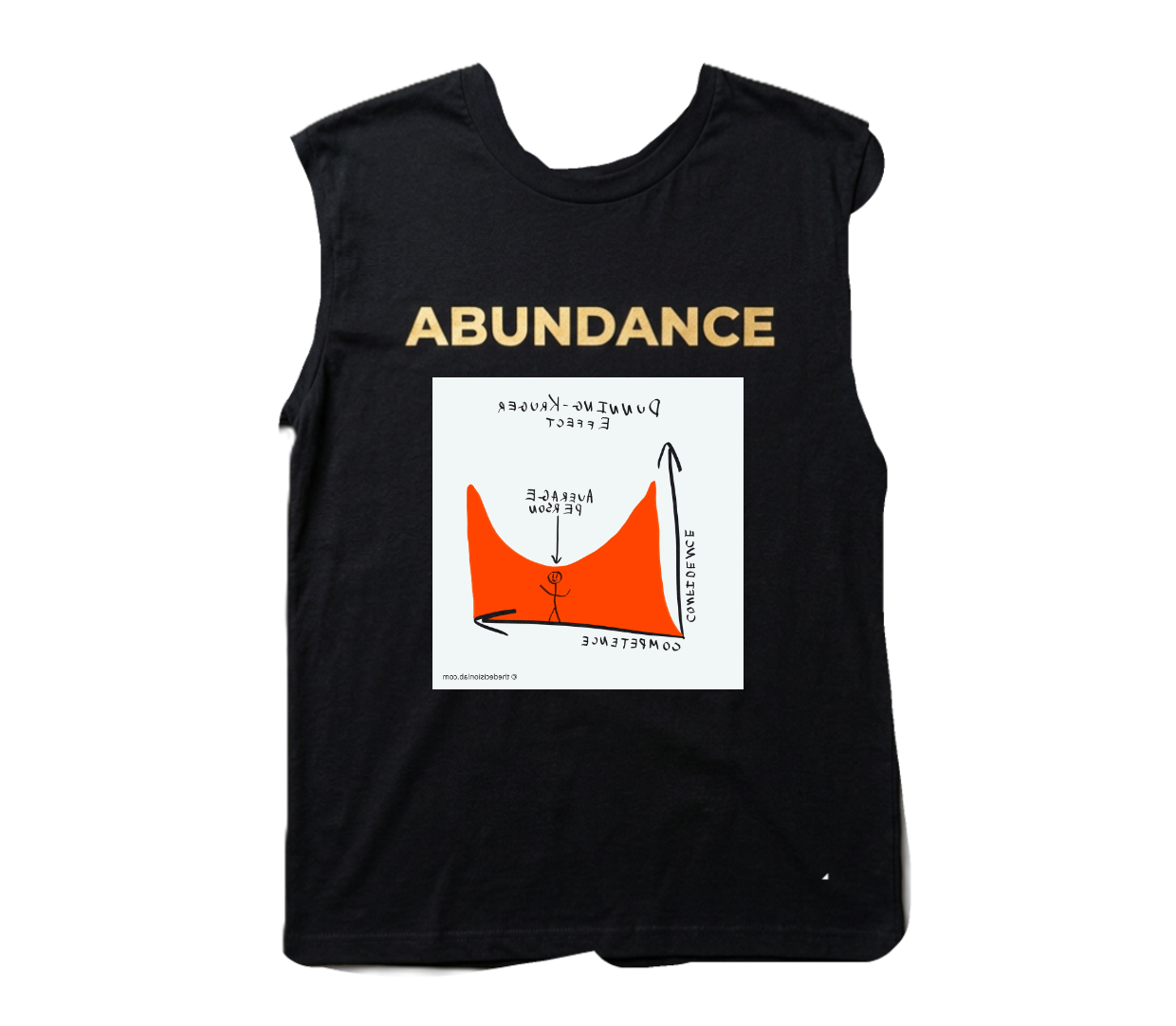
Because the unnuanced tech mindset, fully extended, ends up exactly there: announcing the disappearance of three-quarters of the human workforce, the death of middle-class knowledge work, and the collapse of the institutional structures that hold most people’s livelihoods - and calling it abundance. With a smile. On a t-shirt.
Abundance for whom, exactly? Abundance built how, exactly? Abundance with what social contract, what transition plan, what governance, what care for the humans being inside-outed in the process?
Real abundance - the kind worth building - runs Problem → People → Process → Tools → Scale. It puts the human at the helm, not the bottom of the algorithm. It treats the org chart not as something to kill, but as a living description of who is accountable to whom for what - something to evolve, deliberately, with the people inside it.
The t-shirt version of abundance is just the Inside Out wearing better branding.
The real version is slower, harder, more human, and infinitely more durable. It’s the one I’m building toward, with the right people, on the right foundation, in the right order.
Frame the mindset, and the practice will show the way. ❤️ 🐰 🕳️