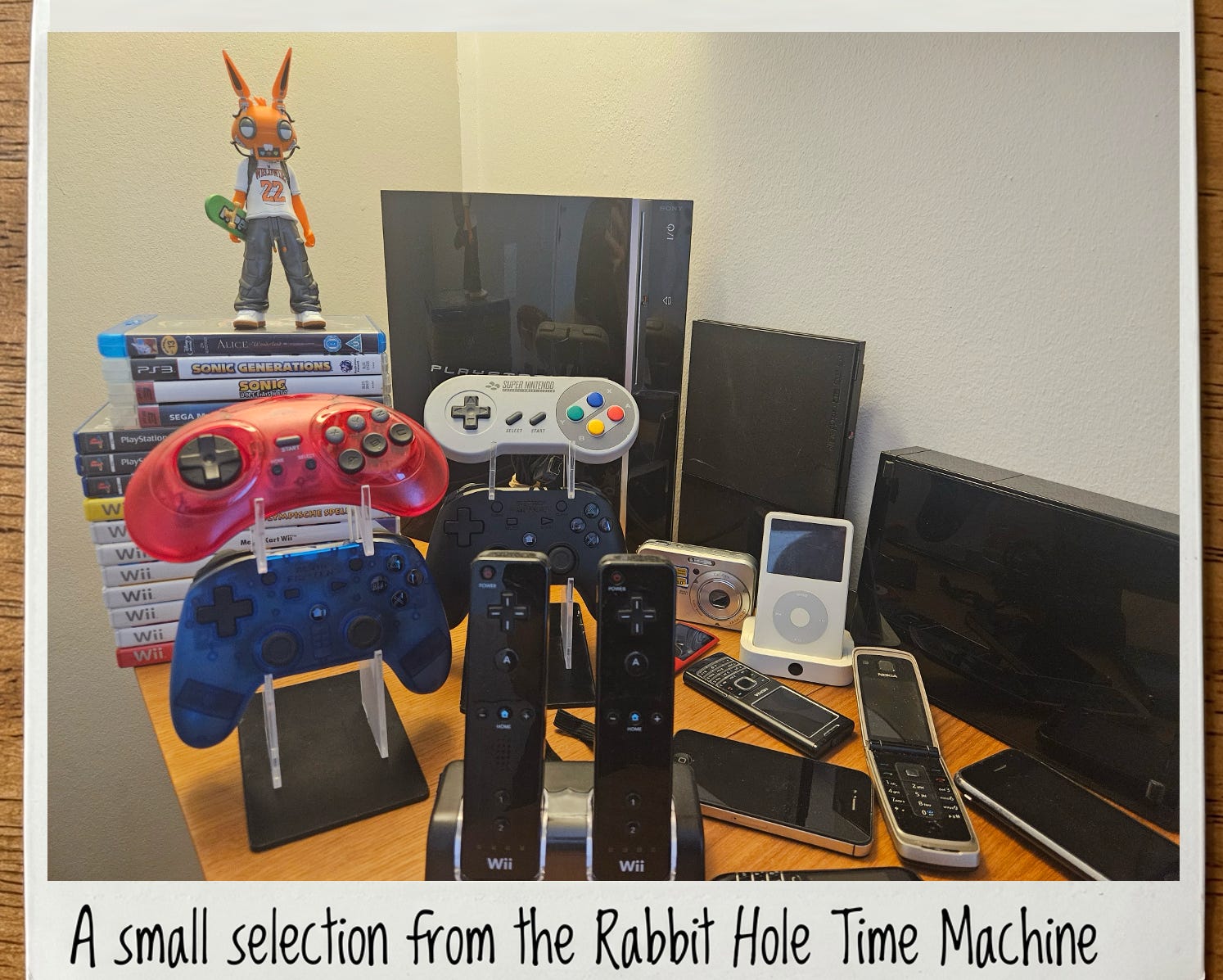
A few weeks back I took the Rabbit Hole ← Time Machine out of the burrow.
I’ve had a light play with this plan - nothing forced, nothing structured. Just reaching for the older option whenever the moment naturally comes around. So, when the kids were after some Mario, instead of streaming it I put the DVD on. We dug into the DVD extras (all 2 of them) - and we had a little go on Super Mario All-Stars on the side.
But this week, a disappointing trip to the cinema for Toy Story 5, which I’d been hoping would be the nice support for the DVD/SNES Mario experience… but ended up not working with the Rabbit Hole ← Time Machine message at all, which was a shame.
So consider this the first field report.
First, the good news: the casual Mario experience was fun
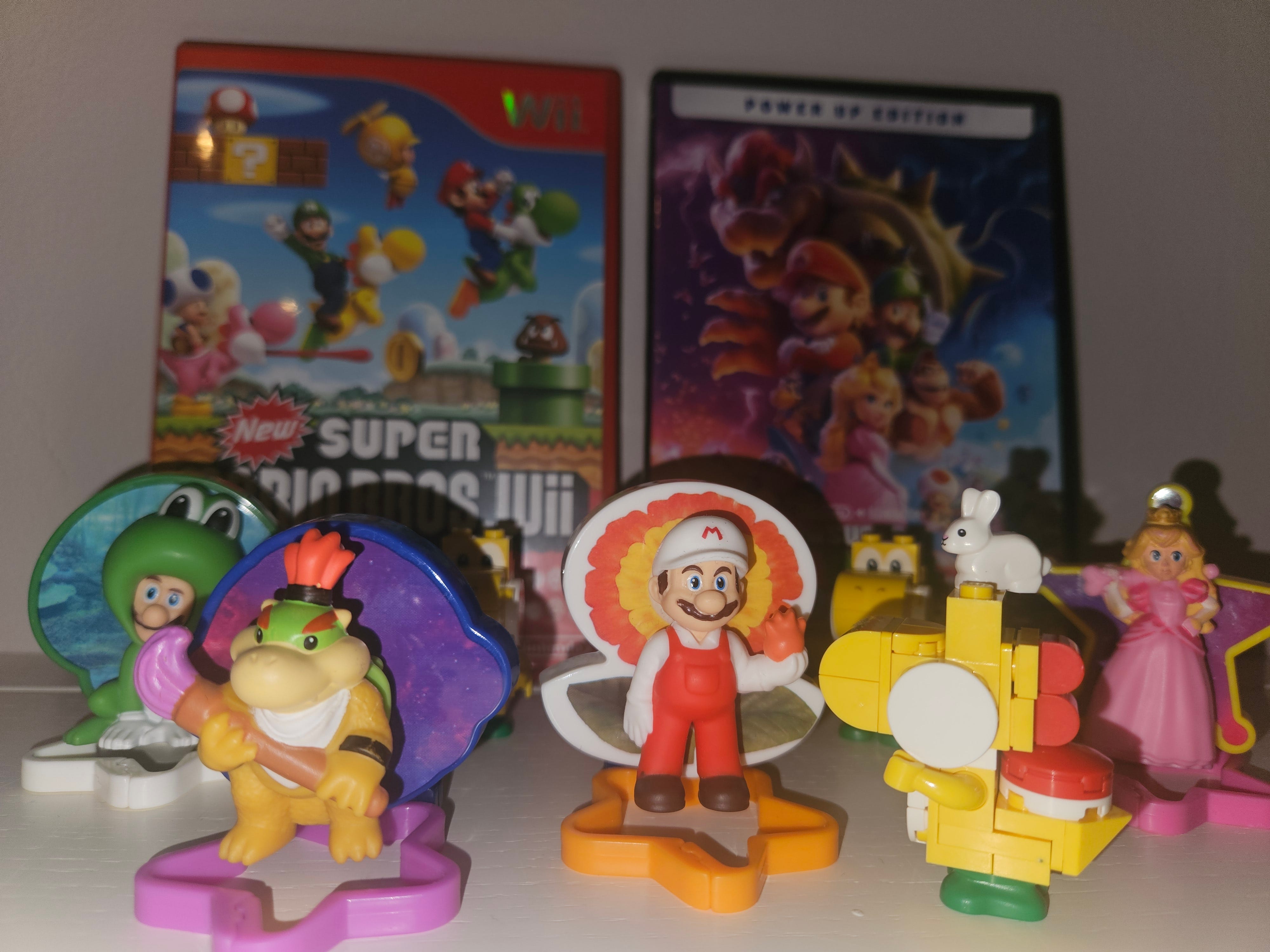
Like I said, I’m not forcing any of this. We’re at “Step 0.1”… just easing the odd bit of physical media in when the moment allows.
For something so small and low-key... The Mario DVD hit hard, the DVD menu, the scene selection and the couple of extras that were on the disc were enjoyed by all.
But what surprised me - or rather, that the kids never noticed…
They didn’t clock that the resolution was nowhere near Netflix. They didn’t notice that the sound was, frankly, rough - it genuinely surprised me how bad “Dolby Digital 5.1” could sound off that disc. None of it registered with them.
What registered was that their imagination caught fire.
The gap is the feature
Here’s the idea, and it runs under everything that follows.
When you’re served a complete, photoreal 4K 3D world, everything is already filled in for you. Every blade of grass, every reflection, every sub-frequency of sound. There’s nothing left for you to do. You become, as the researchers put it, a “guided observer.”
But a rougher, lower-fidelity thing - a chunky 2D world, a worn DVD picture, a crackly disc - leaves gaps. And the brain can’t stand a gap. It rushes in to fill it.
This isn’t a hunch. It’s the same principle running under three completely different fields.
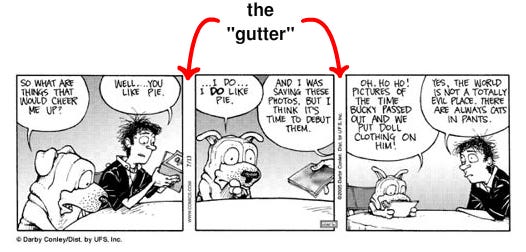
Comics call it closure. Scott McCloud’s whole theory in Understanding Comics is that the empty space between panels - the “gutter” - is where the reader’s imagination does the work. The artist draws the axe raised. The reader is the one who makes the blow land. As McCloud puts it, nothing exists in the gutter except what the reader chooses to put there.
Reading calls it gap-filling. Literary theorist Wolfgang Iser argued that a text is full of deliberate blanks. A book says “a dark, drafty hallway,” and you build the temperature, the light, the dread. No two readers ever picture the same one. You’re not a consumer; you’re a co-author.
Neuroscience has even measured it. A 2023 University of York study, led by Dr. Sebastian Suggate, tested more than 200 young adults and found that people had measurably weaker visual imagination right after watching film clips than after reading - a temporary dip lasting around 25 seconds. The researchers’ point is that reading forces the brain to construct imagery, while film hands it over ready-made. Hand the brain finished images for long enough, and the imagination muscle starts to soften from disuse. To be clear though as a dyslexic kid, I don’t agree with the book Vs film argument. I think it is just about using a medium in the best way for different brains and again telling a story that allows for imaginative leaps.
There’s even research on kids specifically. Give them a polished, finished-looking toy or screen and they go passive - they admire the colours, the polish, the literal function. Give them something rough and visibly unfinished - a cardboard box, a 2D sprite, a low-fi sketch - and they invent. They build stories onto it, precisely because it isn’t done yet and there’s room left to do it. This goes back to the first post and Jude’s Clay and the Code.
That’s exactly what I watched happen with a rough Mario DVD. The low fidelity wasn’t a flaw the kids tolerated. It was the door that let them in. Along with some of the other frictions in the media, setting up the film on the PS3, the film menu etc.
The gap is not a defect of old media. The gap is the feature. Hold that thought - because it’s also the lens I watched Toy Story 5 through.
And then there was Toy Story 5
So a few weeks later, with that Mario result still fresh in my mind, I had high hopes for Toy Story 5. On paper it should have been a gift to this project: a film literally about toys versus tech, physical play versus the screen.
I was disappointed.
The film felt functional.
There was no magic to fire.
Don’t get me wrong. For very short moments, the message was lovely. The movie keeps saying that play just isn’t the same with tech, and when it lets that breathe, it’s nice.
But a Toy Story film can’t just say that. It has to feel like magic, the way Toy Story felt in 1995.
Adults having fun vs. adults freaking out
Here’s the cleanest way I can put it.
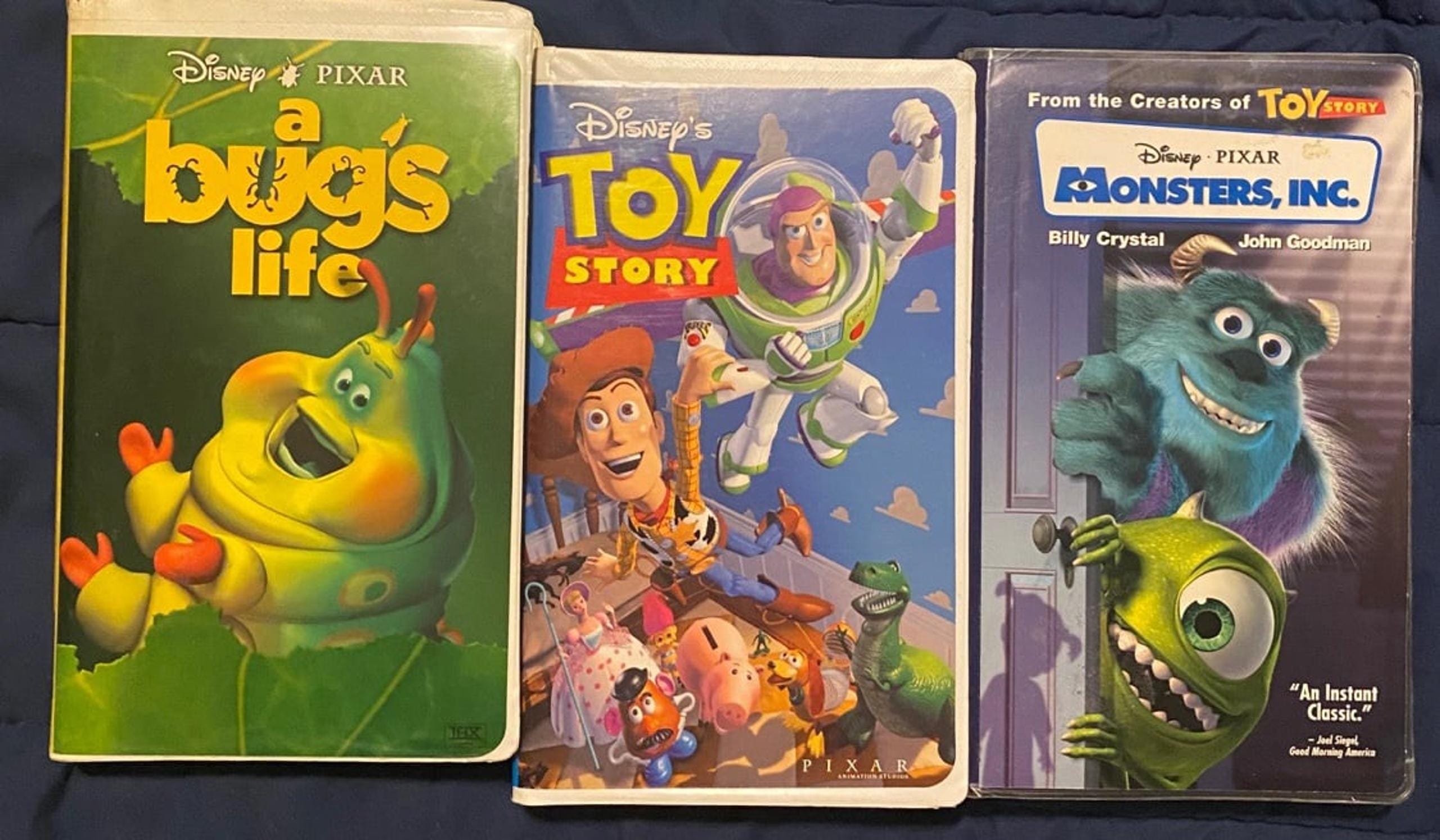
The films that lit a roaring fire in me as a kid, and then made me feel like a kid again as an adult = Toy Story, A Bug’s Life, Monsters, Inc. felt like you were watching a room full of adults having completely unhinged, imaginative fun. That joy was contagious. You could feel it leaking out of the screen. And crucially, they left space for you.
Toy Story 5 didn’t show me that. It showed me a room full of adults freaking out about screens.
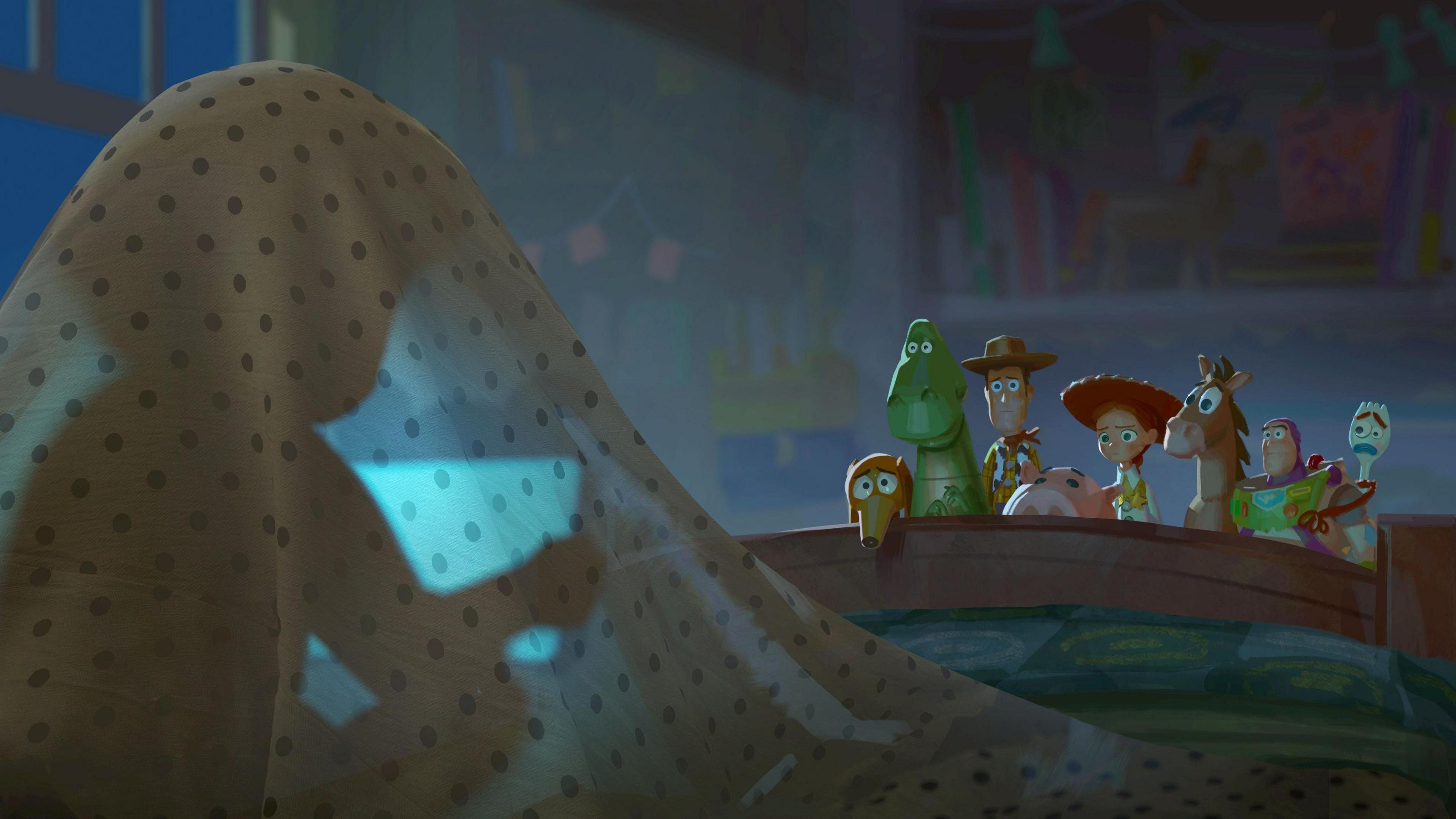
I kept waiting for it to cut loose, to show some genuinely mad imagination beyond Lilypad. Instead, a big chunk of the emotional weight goes into a wedding imagination demonstration. Kids have more in them than that. And so does Pixar.
The whole film felt less like a story for children and more like a reminder aimed at parents. Which is telling, because the night out reminded me that play is already strong in kids. Mine were more captivated by the board games in the cinema reception than by the film itself.
Even the Taylor Swift song - and we are all fans - hit no imaginative chord… No magically replays when we got home.
You should feel the fun
It is the after effect that really led me to writing this.
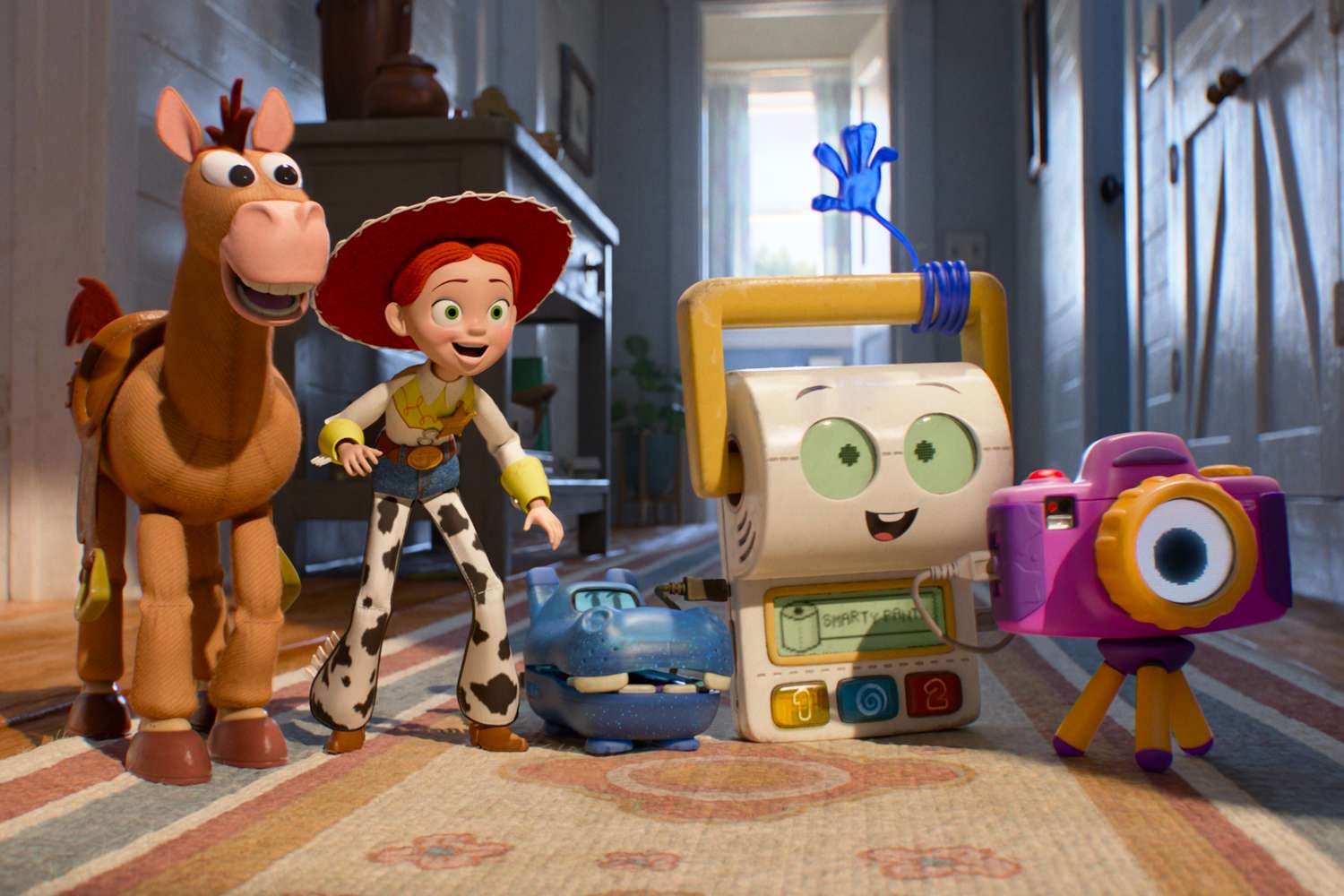
When the credits rolled, there was nothing. No re-enacting a scene in the car. No “what if our toys did that when we left.” No arguing over who’d be which character. Although one of my kids did say “I want that pink camera”. My kids had wanted to leave halfway through - and when it ended, they just made one comment and then nothing else was mentioned… it was all left in cinema screen 5. Zero follow-up. And honestly? Same for me. I walked out feeling oddly empty with a problem thrown at me I already knew was a problem.
The films that lit me up as a kid and led to follow-up never ended when the film ended. They spilled out. They became play in the bedroom for weeks. The gap they left was so big you had to keep filling it.
Toy Story 5 left no gap. We walked out, and that was that.
I think it’s a process problem.
The process was the problem
There’s a diagram in Ed Catmull’s Creativity, Inc.
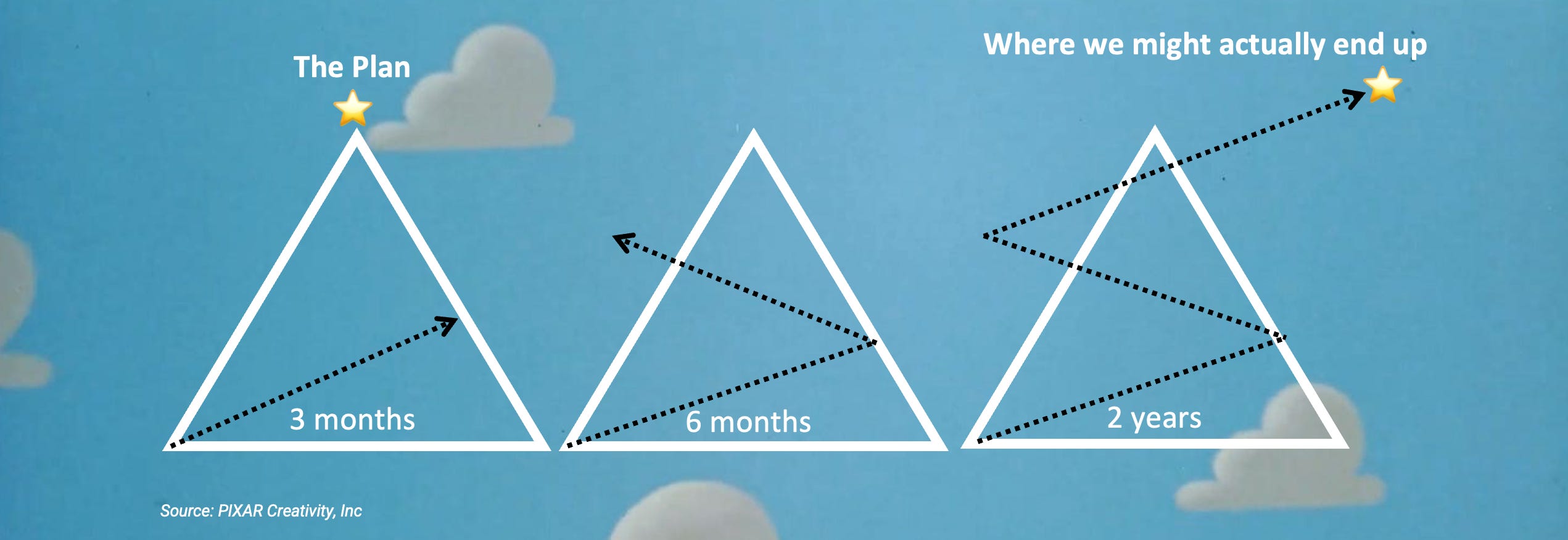
There is a clean, straight arrow, marching neatly to a completed plan.
Then there is a more open curious journey towards the plan (when rabbit holes are welcomed). A scribble that doubles back on itself, gets lost, climbs, falls, wanders - that is where true value is unlocked.
Catmull’s whole point is that the magic comes from curiosity. Pixar films don’t start as finished messages. They start as a “what if,” and then a room of people spend years discovering what the film is actually about. The plan is just the excuse to start wandering. The good stuff is found, not scheduled.
Early ideas are necessarily ugly, incomplete and wrong. The job isn’t to execute them perfectly. The job is to improve them through discovery.
You can really feel the difference in the final film. A film that was genuinely discovered leaves gaps, because even the people making it were finding their way. A film that just executed its plan fills everything in, because there was nothing left to discover. It hands you the thesis the same way bad media hands you every pixel.
That’s exactly what I felt. Toy Story 5 had no real feeling. The straight line. The plan, delivered on time… The most expensive Toy Story film of all time - delivered.
What the great ones discovered
Look at what the earlier films started as - and what they became:
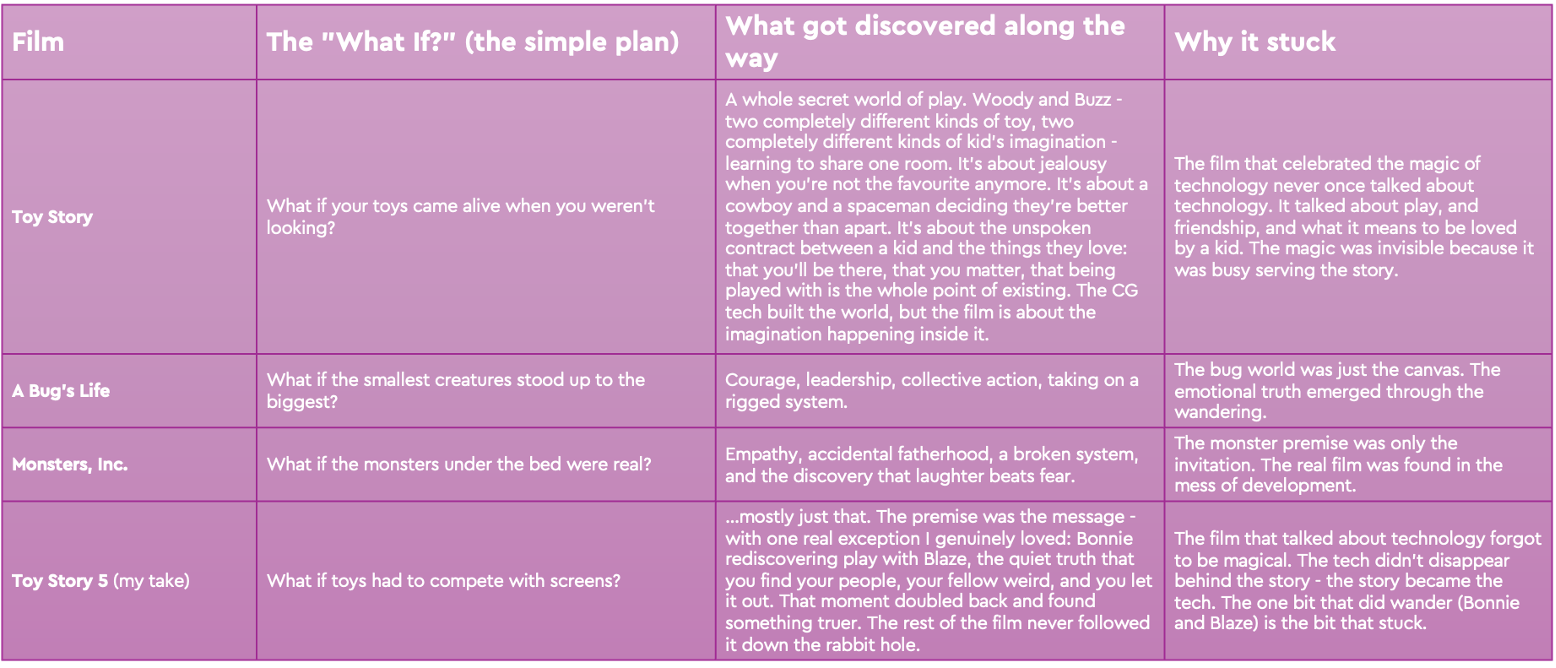
Every film in that top group started with a “what if” and then went on a two-year scribble to find its soul. None of them set out to lecture you about their premise. The premise was the doorway, not the destination.
Toy Story 5 mostly walked through the doorway and then stayed in it - pointing at it, telling you about doorways. The one time it did wander off (Bonnie and Blaze) you can feel the difference instantly. That moment breathes. It’s the rest of the film that stays put.
We know what magic looks like
What really exposed Toy Story 5 for me happened before Toy Story 5 even got into the swing of things. The opening of Toy Story 5 was just an on the nose reference back the best scene of Toy Story 2 - Watch below for all the original feels.
Then think about the opening of Toy Story. Randy Newman’s “You’ve Got a Friend in Me.” The cloud wallpaper. The slow pan down into Andy’s room, into a play scenario, into the birthday setup. Three minutes. No dialogue doing the heavy lifting. Just pure magic.
Those two clips are better than anything Toy Story 5 sets up in its entire runtime - I mean it is a high bar but still.
And this is the part that ties in with my main point. Toy Story was the first ever feature-length film made entirely with computer-generated imagery. It was, at the time, the most radical piece of screen technology on the planet. A genuine revolution.
But the tech was never the point. You don’t watch that opening and think about polygons and render farms. You think about being a kid in your room with your toys. The technology was completely invisible. It didn’t show off, it didn’t lecture, it didn’t make itself the subject. It just quietly enabled the story. It got out of the way of the magic.
AND Toy Story (1995) was made by a near-bankrupt studio with a fraction of the tools, a render farm held together with hope, and a tiny team who didn’t even know if the thing would work. Toy Story 5 is the most expensive, most resourced, most technically capable film Pixar has ever made. Every constraint that boxed in the original is gone.
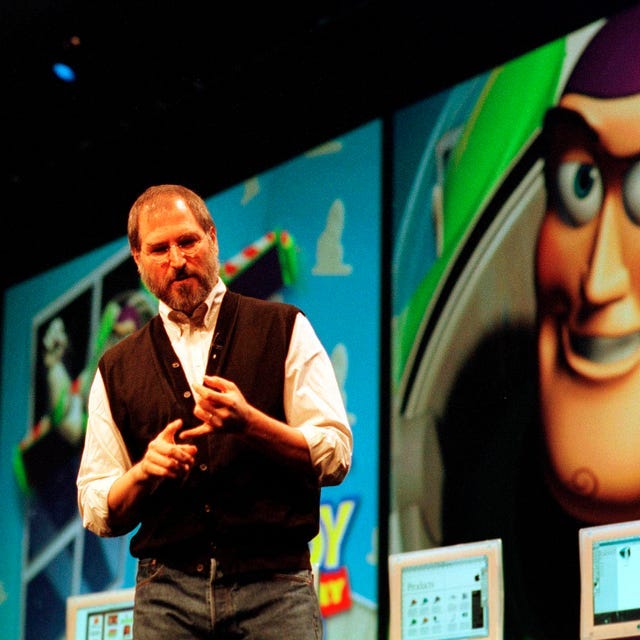
Imagination doesn’t run on resources. More render power, more budget, more polish - none of it generates wonder, Steve Jobs realised that. Wonder comes from the wandering, from a room of people chasing a “what if” until they find something true.
Toy Story 5 makes technology the literal subject - Lilypad, screens, tech versus toys.
The film that was the magic of technology never directly talked about it. The film that directly talked about technology forgot to be magic.
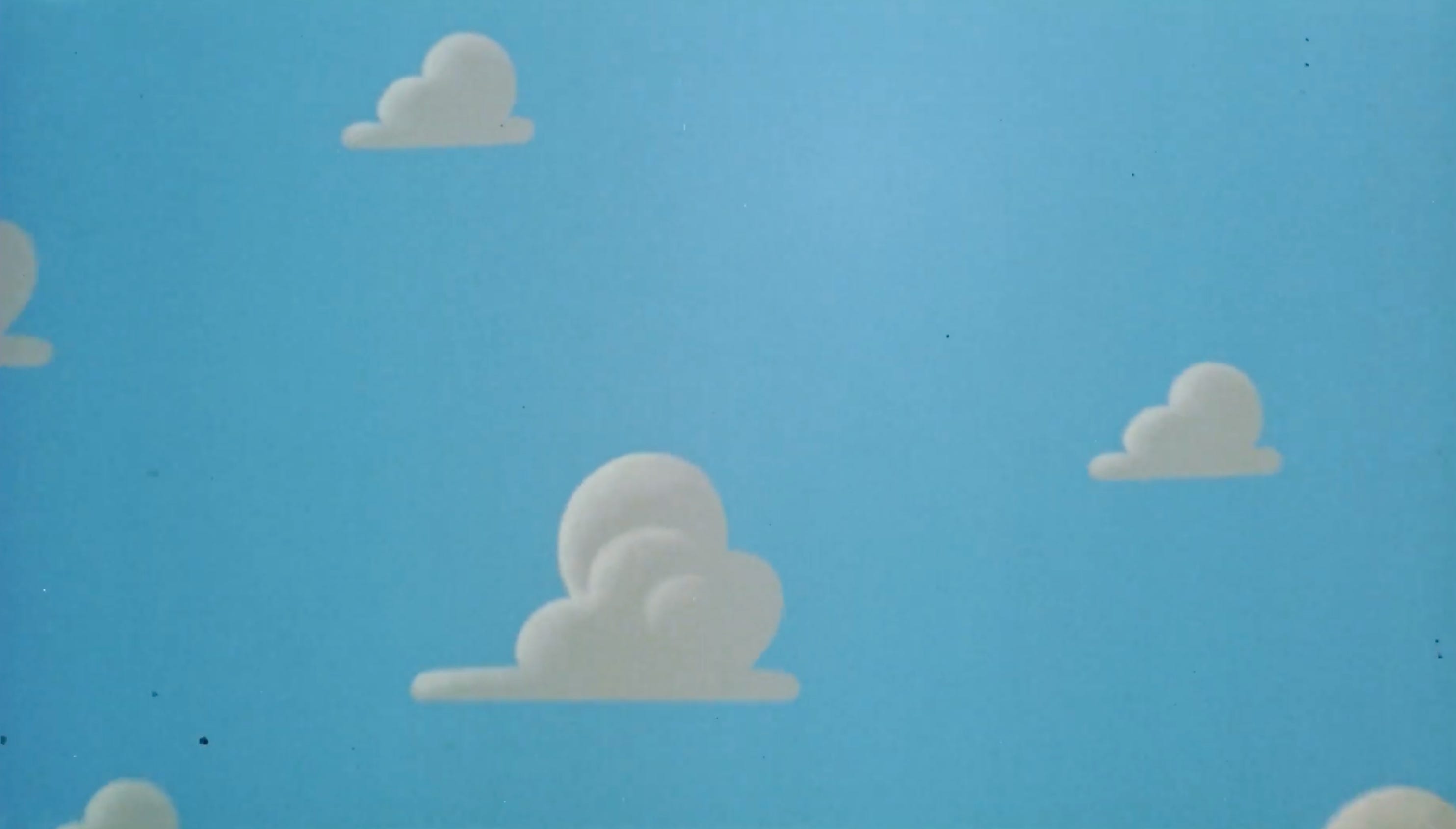
Tech, at its best, is the render farm behind the cloud wallpaper. Invisible, in service of the story, enabling play rather than being the subject of it. The moment it becomes the subject - the moment it starts pointing at itself - you’ve lost the room. You’ve stopped showing and started telling. As Jessie says to ‘Smarty Pants’: “That wasn't play, it was just a game."
That’s the exact line I want my kids to feel in their bones. Not “tech is bad,” but “tech is just a game, it’s not in and of itself play, it needs to disappear and fuel human imagination.” A game cartridge that just works and gets out of the way (no Downloadable Content required). A worn VHS that asks nothing of you but to press play and to feel the story.
This is why I’m playing offence, not defence
The Rabbit Hole ← Time Machine was never about taking tech down a peg. It’s not a “versus.” It’s not about telling anyone that screens are bad.
It’s just about showing. That next to real imagination, next to a random rambling conversation, next to unexpected out-of-the-box magic, the screen passively pulling you in is nothing. Zero by comparison.
Toy Story 5, for all its talk, was a film playing defence. A fully-resolved reminder of what we stand to lose, with no gap left for the viewer to fill. The straight-line plan, delivered on time.
But that’s not the game. Don’t play defence. Play offence - Fight - wander, fall down rabbit holes and have fun out loud, and leave the door open behind you.
I’m confident an OG Nintendo can be shown to be more magical than modern Mario. Not by saying so, but by doing it. A chaotic round of Mario Party - no online, no accounts, just a room of people laughing. That’s offence. That’s the contagious joy, and it’s full of gaps, because half the fun is the stuff happening in the room around the screen.
Less 4K. More 2D and gap-filling. Less perfect resolution, more space for the imagination to do the work. I’m not being a snob about pixels. I’m trying to keep the door open, so the kids can be the co-author and not just the audience.
The one thing I loved, and wish they’d gone further with
To be fair, there was a real gem in Toy Story 5 - the one moment when it felt like the film actually wandered: the message about finding your people, your fellow weird, and being comfortable enough to let it out. Bonnie and Blaze.
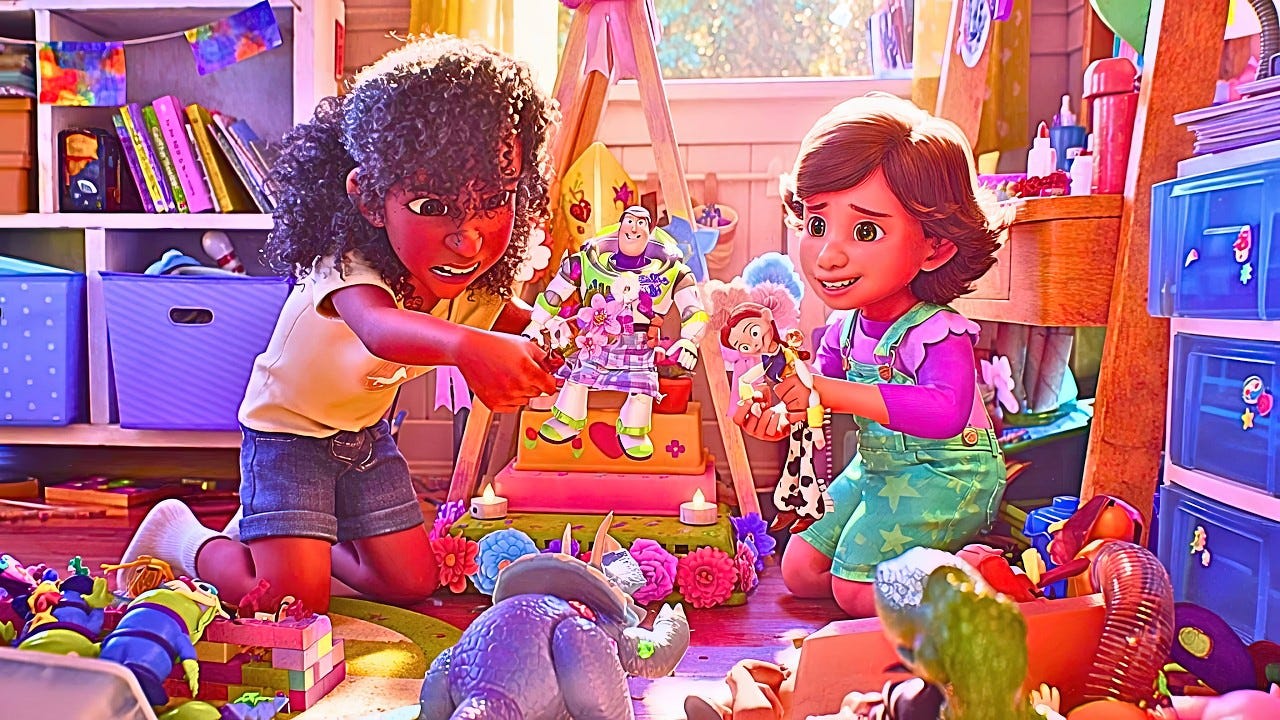
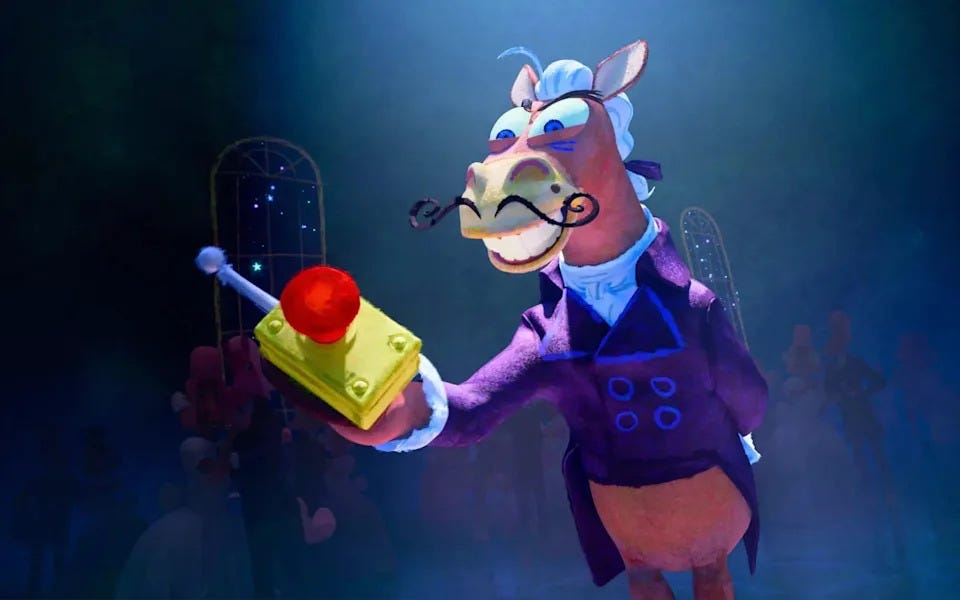
I loved that, and I think so much more could have been made of it. More weirdness. More expressiveness. Because that’s not just a kids’ message. It’s an adult one too.
That “boring middle” is exactly where tech tends to drag us. Frictionless, optimised, algorithmically averaged-out - the ultimate everything-filled-in-for-you. The antidote is weirdness and expression, the willingness to leave a gap and let something strange grow in it. And again, the only way to teach that is to show it, not tell it.
Where this leaves the curriculum
So, the update.
This trip didn’t shake the plan. It gave it a backbone. The Time Machine isn’t really about media formats at all. It’s about experience, effort. It’s about content that doesn’t push a tidy, fully-resolved message at you, but pulls you in and leaves a gap big enough for an imagination to climb through.
That’s the through-line under every step of the curriculum, I now realise. Vinyl crackle, VHS glitch, 2D sprites, T9 text on a Nokia. They’re all gappy. They all make you meet them halfway. And whatever you build to meet them is yours.
So when the time’s right, we won’t be chasing the flashiest thing. We’ll likely sit down with Toy Story on VHS, on a CRT. Or something like it.
This was never about old. It was about gaps.
That’s the fire I want to light. Not by reminding anyone what they’re losing.
By leaving a gap, and showing them what they can fill it with.